Mining a Data-Driven World with Artificial Intelligence
Data is a cost until its value is established
The value already held
Organizations keep far more data than they use, and they pay for all of it: to store it, secure it, migrate it, and produce it on demand. Vendor surveys put about half of stored data in the category Gartner calls dark: kept, but of unknown use (Veritas, 2016; Splunk, 2019).
Much of that data holds value that has stayed out of reach, because finding it and reading it cost more than it returned. Past the point where its value is established, the same data is an asset waiting to be recovered.
AI, used with discipline, can change that arithmetic. The method is designed to lower the cost of recovery, so that more of what is held crosses from cost to asset. Temporal Data Dynamics is a San Diego-based company developing the science and the method to do it.
What happened, when, and how we know
Generative Temporal Referencing (GTR)
Geographic information systems place data on location. GTR places data on time. Every record is given its place in one ordered line, even where it carries no date of its own.
Placed this way, fragments from sources that never refer to one another, a notice here, a report there, a meeting record elsewhere, fall into sequences that no single source shows. And what the record does not establish is stated as an open question, never filled in by assumption.
Your records already hold the story of what happened and when. GTR is the science of reading it.
Read the paper (opens in a new tab) · In the book: Chapters 8 and 9 · How the method puts it to work
Six ways in
- Executives
- Know what your records can prove, and by when.
- Risk, decisions, obligations with dates
- Managers and program leads
- The full history of a program, in order, with its sources.
- Deadlines, audits, handoffs
- Engineers and technical professionals
- Each revision in sequence: what changed, when, and on whose approval.
- Specs, quality records, change history
- Administrative staff
- Find the record and its history, with the source attached.
- Requests, filing, finding things
- Frontline and field crews
- What you logged on the day still counts years later.
- Logs, checklists, proof of work done
- Independent practitioners
- The back office of a larger firm, sized for one.
- Everything, alone
In your field's own language
- RFI
- Submittal
- As-built
- O&M manual
- Deviation
- CAPA
- Phase I
- Chain of custody
- Restricted funds
- Bank Secrecy Act records
- First article inspection
- SF330
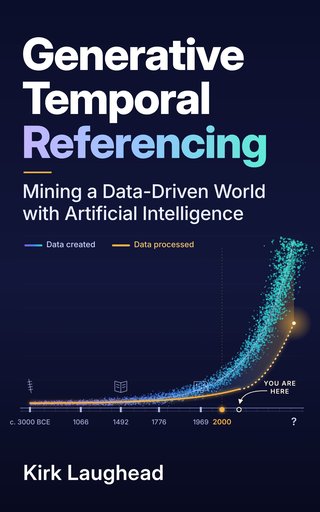
The book
A question your records could answer
If your records raise a question the method could answer, send us an inquiry.